Matchstick Radar
Data-as-a-Service for programmatic market event delivery
Full Technical Documentation
For API reference, data schema, quickstart guide, and integration details, see the Radar Technical Docs →
What is Radar?
Matchstick Radar is a hosted data service that delivers insider trading activity programmatically. Same events as Matchstick Events, delivered as structured data for scripts, strategies, and automation.
Radar collects SEC Form 4 filings, normalizes them into a consistent schema, and delivers them to downstream systems in real time.
What You Get
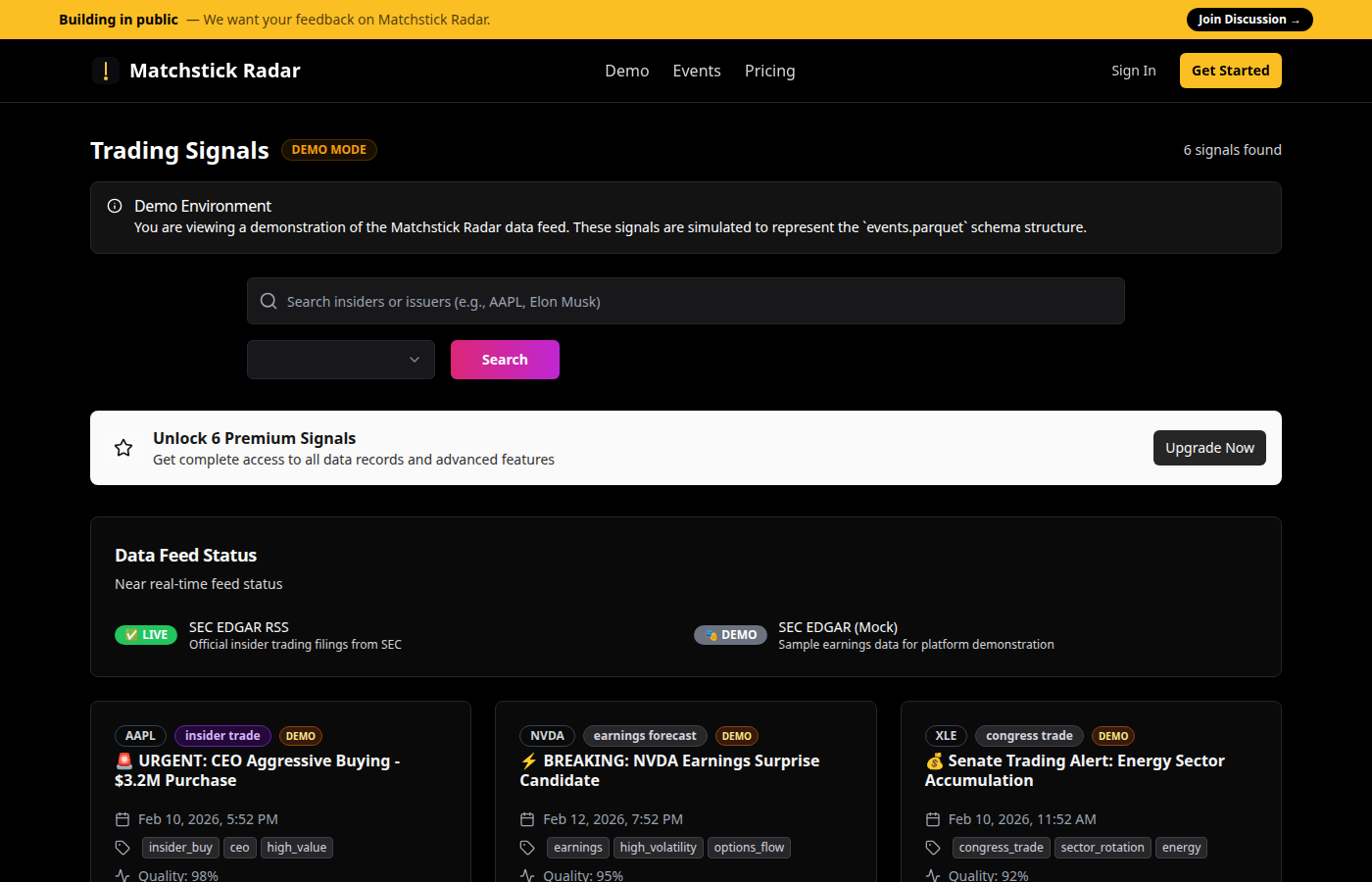
Real-time insider trading feed with search, filtering, and data feed status
- Real-time insider trading activity — SEC Form 4 filings, filtered for high-conviction purchases
- 5-year historical context — Validate behavior before deploying capital
- Push-based delivery — Webhooks, REST API, Python CLI
- Local-first option — Download and query data on your machine
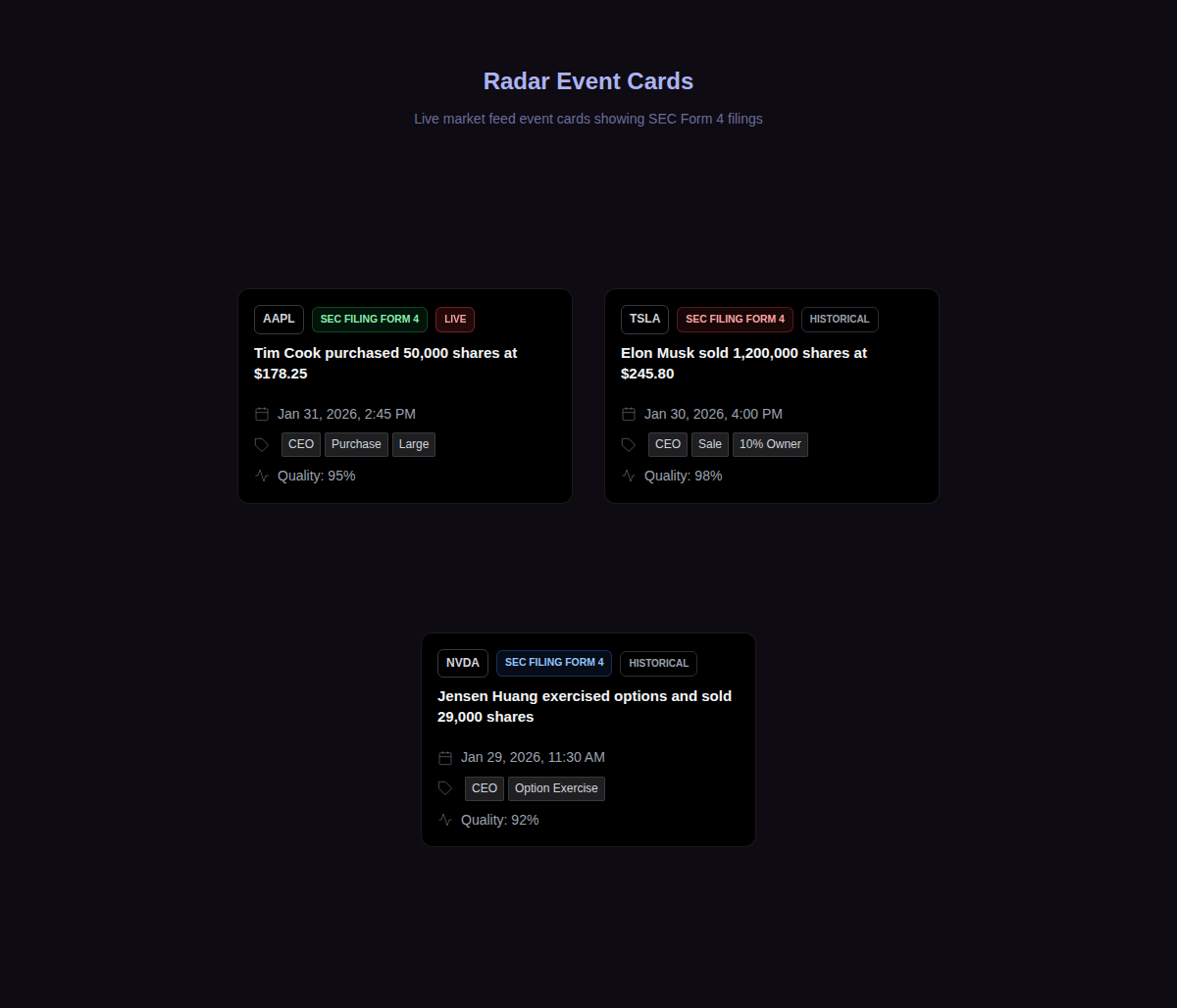
Structured event cards with ticker, insider role, transaction details, and quality scoring
Alerts
Set up custom alert rules to get notified when insider trades match your criteria. Start with pre-configured templates or build your own.
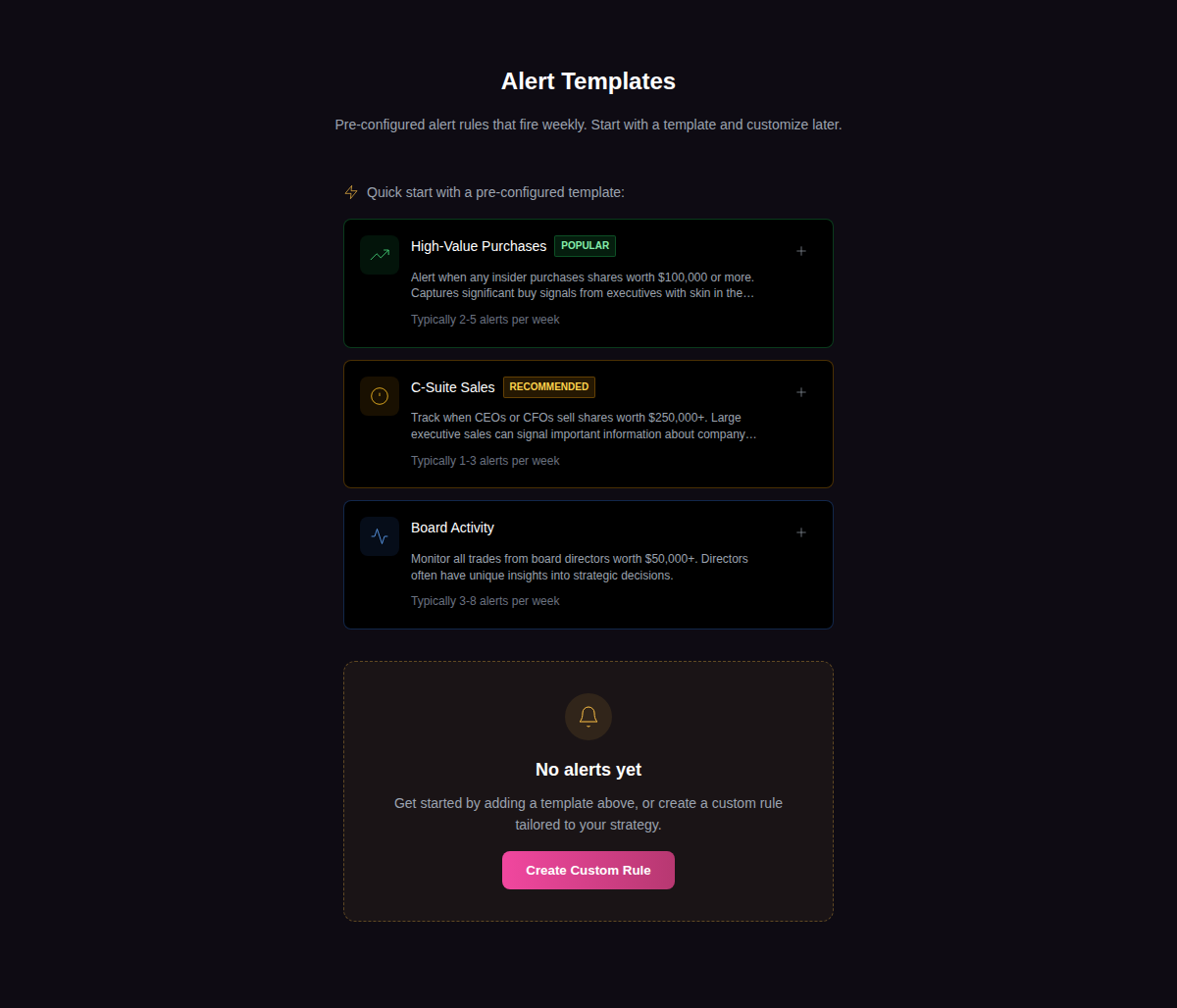
Pre-configured alert templates: High-Value Purchases, C-Suite Sales, and Board Activity
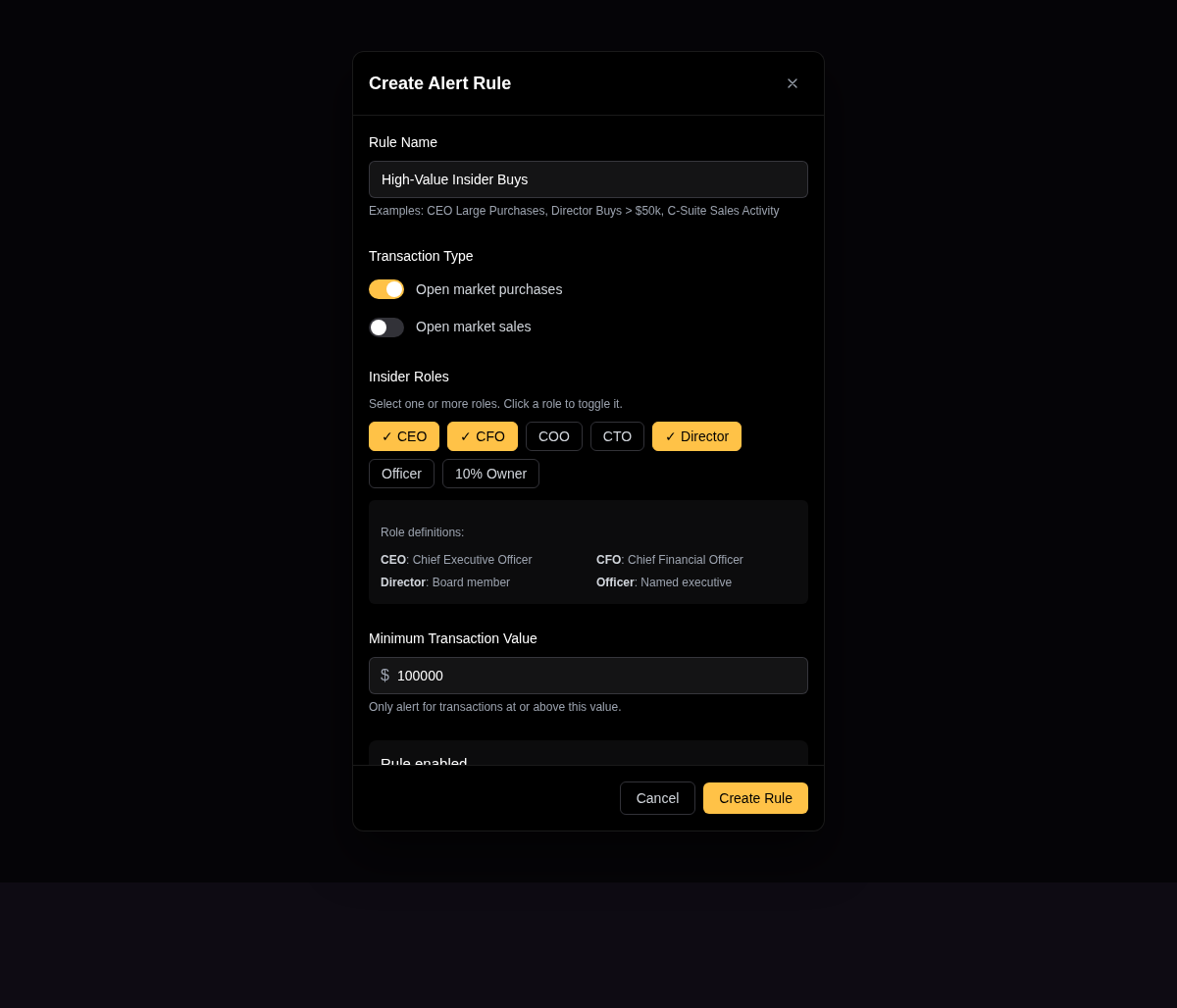
Custom alert rule editor with transaction type, insider role, and minimum value filters
Status: Available Now
Radar is live and accepting subscribers.
- Insider trade data: Operational
- Historical backfill: 5 years (2020-2025)
- API stability: v1 locked, backwards compatible
- Alert templates: High-Value Purchases, C-Suite Sales, Board Activity
- Market calendar awareness: Dynamic staleness thresholds for weekends and holidays
What’s Not Included
- No trade execution
- No derived recommendations or trade signals
- No “AI picks” or recommendations
Why Radar Exists
Institutional traders pay $24,000/year for terminals. Independent traders glue together feeds, scrapers, and alerts.
Radar closes that gap with a simple, honest insider trading feed.
Relationship to Matchstick Events
- Matchstick Events is a free UI for humans
- Matchstick Radar is a paid service for systems
You can use Events without Radar. You can use Radar without Events.
Pricing
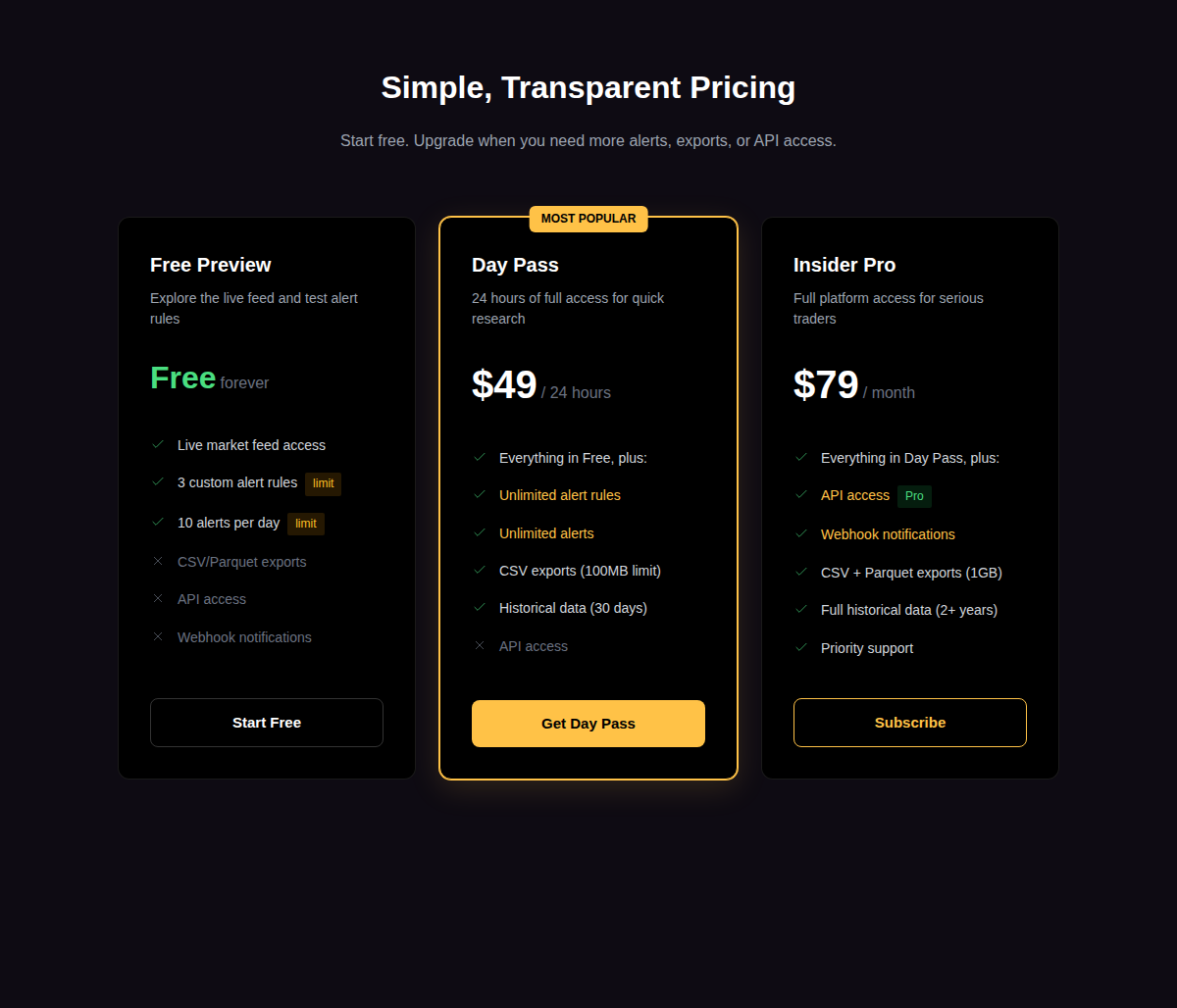
Free Preview, Day Pass ($49/24hr), and Insider Pro ($79/month)
See /offer for current pricing and plans.
Technical Details
- Delivery methods: Webhooks (POST), REST API (GET), Python CLI
- Authentication: Bearer token
- Rate limits: Based on subscription tier
- Data format: JSON, Parquet, CSV
- Timestamp format: ISO 8601 UTC
For full API reference and field definitions, see the Radar Technical Docs.
Getting Started
- Sign up for Radar
- Receive API credentials
- Configure webhook endpoint or use Python CLI
- Start receiving events
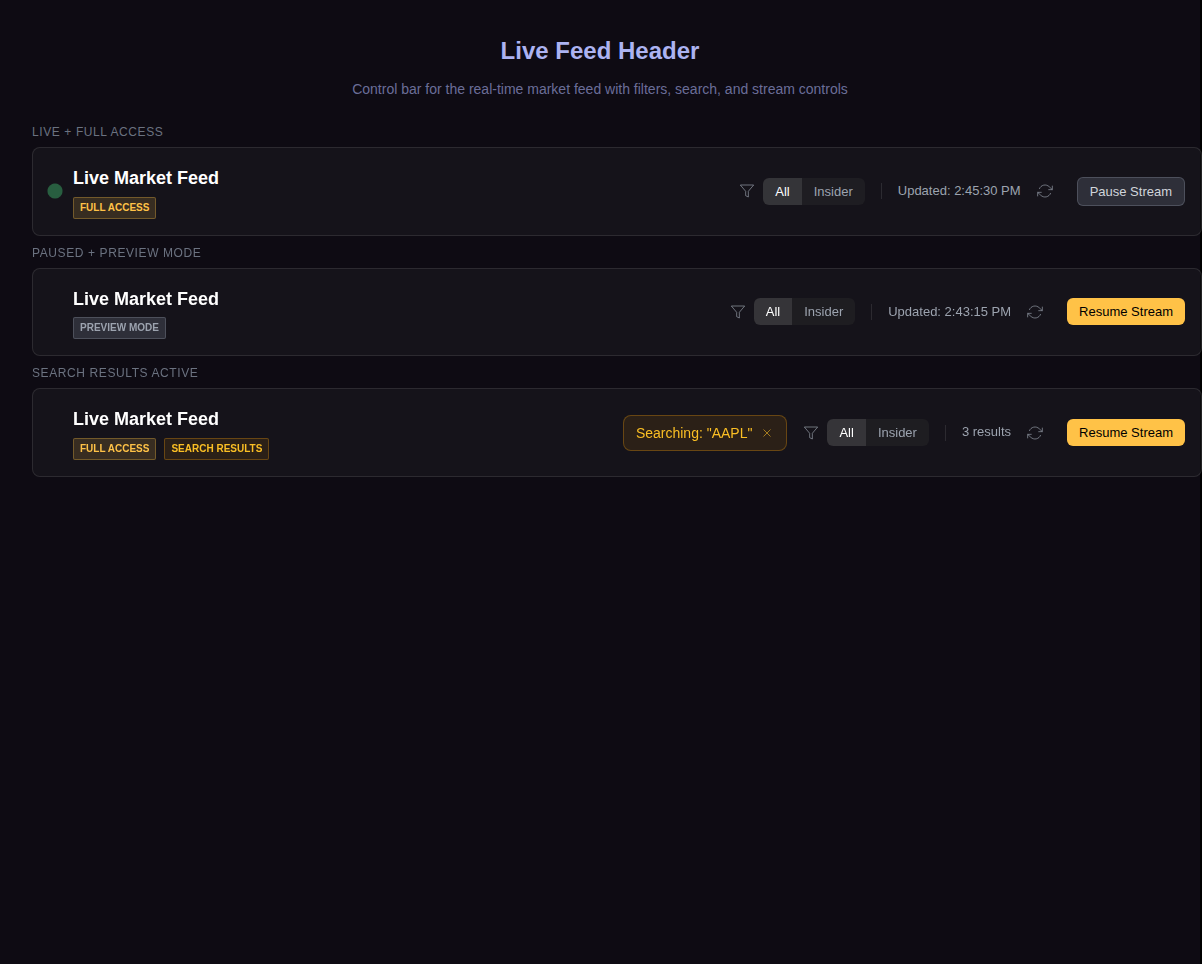
Feed control bar with filters, search, stream controls, and access level indicators
Guides:
- Quickstart — Get data flowing in minutes
- Form 4 Alerts — Set up email notifications
- Data Downloads — Parquet and CSV exports
- Integrations — Alpaca and webhook setup